
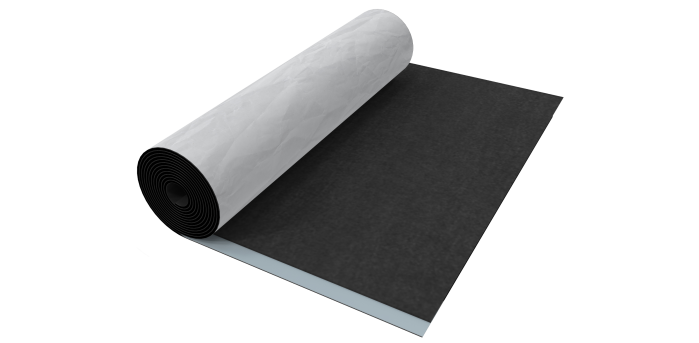
Self-adhesive bituminous felt with HDPE foil – how does it work and what does it change in construction work?
Properly selected and correctly installed waterproofing is a key element in protecting a building from the destructive effects of moisture and water. This applies to both foundations and elements exposed to intense weather conditions. In such cases, self-adhesive bituminous felt is becoming an increasingly popular solution – a modern alternative to classic welded bituminous felts, enabling quick and clean installation without the use of fire.
Are all self-adhesive bituminous felts the same?
Although self-adhesive bituminous felt is a popular choice today, it is worth considering carefully which product best meets our requirements. NEXLER Membrana SP is a solution that may come as a surprise to many professionals. Why? Because it offers much more than traditional self-adhesive bituminous felts. NEXLER Membrana SP combines innovative properties that make it a product worth paying special attention to.
NEXLER Membrane SP is a bituminous self-adhesive bituminous felt designed for waterproof insulation in various areas – from underground parts of buildings to balcony and terrace slabs. SBS modification ensures high flexibility, resistance to microcracks in the substrate and durability in changing thermal conditions. This product is one of the most reliable options for water protection, as it provides full waterproof insulation in a single layer.
The self-adhesive layer on the underside allows for quick and effective attachment to a primed mineral surface without the need for a blowtorch. This means that the product can also be used in places where open flames are prohibited or inadvisable. The top side of the bituminous felt is protected with HDPE foil, which facilitates work with subsequent finishing layers – it ensures better separation from subsequent layers and reduces the risk of mortar adhesion. What is more, this foil increases the mechanical resistance of the membrane and protects it from accidental damage during installation.
Advantages of installation – safe and precise
The use of self-adhesive bituminous felt significantly simplifies the insulation process, minimising the risk of installation errors. NEXLER Membrana SP is ideal for both horizontal and vertical surfaces. Its flexibility allows it to fit perfectly to structural details such as corners, vertical-horizontal transitions and edge finishes. In addition, the membrane has no shape memory, which means that once unrolled, it does not tend to curl off vertical surfaces, facilitating precise installation, especially in more difficult conditions.
NEXLER Membrana SP also exhibits exceptional resistance to low temperatures – works can be carried out even at temperatures as low as -5°C, provided that the substrate surface remains dry. In such conditions, it is advisable to warm the rolls in advance (e.g. in a heated room) or gently heat the substrate before application.
What should you pay special attention to during application?
Although the installation of self-adhesive bituminous felt is much simpler than in the case of welded bituminous felts, it requires equally careful preparation of the substrate and precision in the work.
The most important rules:
- The substrate must be dry, clean and load-bearing – the presence of moisture, dust or traces of oil can significantly weaken the adhesion of the membrane.
- Priming – it is recommended to use bituminous preparations such as NEXLER BITFLEX Primer or NEXLER Penetrator G7, which improve adhesion and even out the absorbency of the substrate.
- Checking overlaps and details – joints should be pressed down firmly, and all penetrations and corners should be additionally secured with a strip of membrane and a suitably profiled facet (e.g. made of bituminous compound). Overlaps should be checked for tightness.
It is also advisable to avoid working in strong winds, precipitation and on unprotected substrates. Compliance with the basic rules of application significantly affects the tightness, durability and effectiveness of the insulation.
Both in foundation works and in the insulation of balconies or terraces, the use of a self-adhesive membrane such as NEXLER Membrana SP combines high quality workmanship with safety and time savings. It is a solution that supports professionals in the implementation of durable and reliable waterproofing systems.
Products used

Membrana SP
Self-adhesive bituminous membrane
Find out moreOther articles from the Roof waterproofing category that may interest you
 Article
A roof with a vision – green solutions for investments
Green roofs in modern construction are not a passing trend, but a real market need driven by climate, urbanisation and regulatory challenges. They are a key element of sustainable development strategies, not only distinguishing investments on the market, but also having a real impact on their value and functionality. It is a space where ecology meets long-term safety and technical durability.
 Article
The unsung hero of the roof – NEXLER NOx Cut
Growing social expectations and stricter environmental regulations are changing the face of the construction sector. Today, responsibility for the environment and the health of users is becoming an important part of the investment process. Modern construction is increasingly turning to solutions that not only reduce carbon footprint and energy consumption, but also improve quality of life.
 Article
Why is it worth priming the substrate before welding bituminous felt?
A roof that leaks after two seasons? Complaints, lost customer trust – something every roofer wants to avoid. That is why proper substrate preparation, including priming, is not a detail, but the foundation of durable and trouble-free roofing. Although it may seem like a mere ‘formality’, in practice, priming has a huge impact on the durability, safety and effectiveness of the entire waterproofing system. In this article, we explain briefly and concisely why priming is not an option but a necessity.